

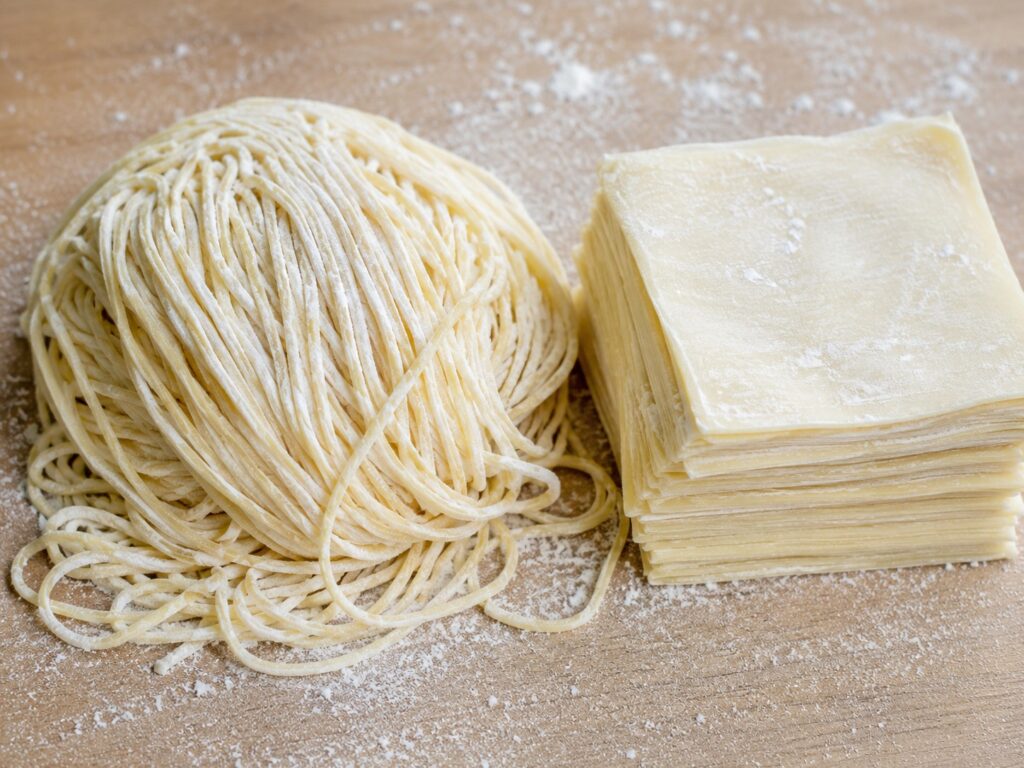
Fresh noodles and wonton wrappers are essential ingredients for restaurants. The freshness and texture of these products directly affect the quality of dishes served to customers. However, these types of ingredients are sensitive to temperature and humidity. Improper storage may cause noodles to become dry, hard, clumped together, develop unusual odors, or deteriorate faster than expected.
Many common issues found in restaurants are not caused by product quality, but by improper storage methods after receiving the products. Therefore, understanding the correct storage practices is essential to maintaining product quality, reducing waste, and ensuring consistent food standards in every dish.
A. Check Products Immediately Upon Receiving
Upon receiving the products, always perform a preliminary inspection before storage:
1.Check that the packaging is properly sealed and free from tears or damage.
2.Check the production date and expiration date.
3.Check the product temperature (for temperature-controlled transportation).
4.Check the appearance of the noodles and wonton wrappers to ensure they are normal, with no unusual color, odor, or foreign substances.
B. Proper Storage Guidelines
After receiving the products, they should be placed immediately in the refrigerator or freezer according to the storage instructions on the product label.
C. Avoid Storing Products in Areas That:
1.Have high temperatures, especially during hot weather when extra care is required.
2.Are exposed to direct sunlight.
3.Have high humidity. Storage in ice containers covered with melting ice is not recommended. Products should be kept in a cool and dry place.
4.Are near heat sources, such as stoves or kitchen equipment that continuously emits heat.
In addition, avoid opening and closing refrigerator doors more often than necessary, as frequent temperature fluctuations may affect product quality and storage life.
D. Organizing Products Using the FIFO System
One of the most effective inventory management methods for restaurants is the First In First Out (FIFO) principle, or “use the oldest stock first.”
Products received earlier should always be used before newer stock to reduce the risk of expired products and minimize waste.
Recommended Practices:
- Place older product batches at the front.
- Place newer product batches at the back.
- Clearly label the receiving date on products.
- Check inventory regularly every day.
Consistent use of the FIFO system helps restaurants control costs and maintain ingredient quality effectively.
E. Handling Products After Opening the Package
After opening the package, products should be handled properly to prevent moisture loss and contamination.
For fresh noodles and wonton wrappers:
1.Reseal the bag tightly after every use.
2.Store in an airtight container, such as a food storage box.
3.Return the products to the freezer immediately after use.
4.Use within 1 week after opening the package.
Leaving opened packages exposed for too long may cause noodles or wonton wrappers to lose moisture, resulting in dryness, hardness, brittleness, or tearing during use.
In addition, avoid repeatedly refreezing products that have already thawed, as this may shorten shelf life and increase food safety risks.
F. Inventory Management for Restaurants
Planning purchases according to actual usage volume is another important factor in reducing costs and minimizing losses caused by expired products.
Recommended practices include:
1.Check inventory daily.
2.Record daily product usage.
3.Calculate average weekly consumption.
4.Plan purchasing according to product delivery schedules.
Overstocking may cause products to remain in storage until they approach expiration, while insufficient stock may affect customer service during high-demand periods.
G. Signs That Products Should Not Be Used
For consumer safety, stop using the products immediately if any of the following abnormalities are found:
1.Unusual odor.
2.Noodles break apart when boiled and cannot be lifted properly.
3.Mold or abnormal colored spots are found.
4.Packaging is damaged or has an unusual appearance.