

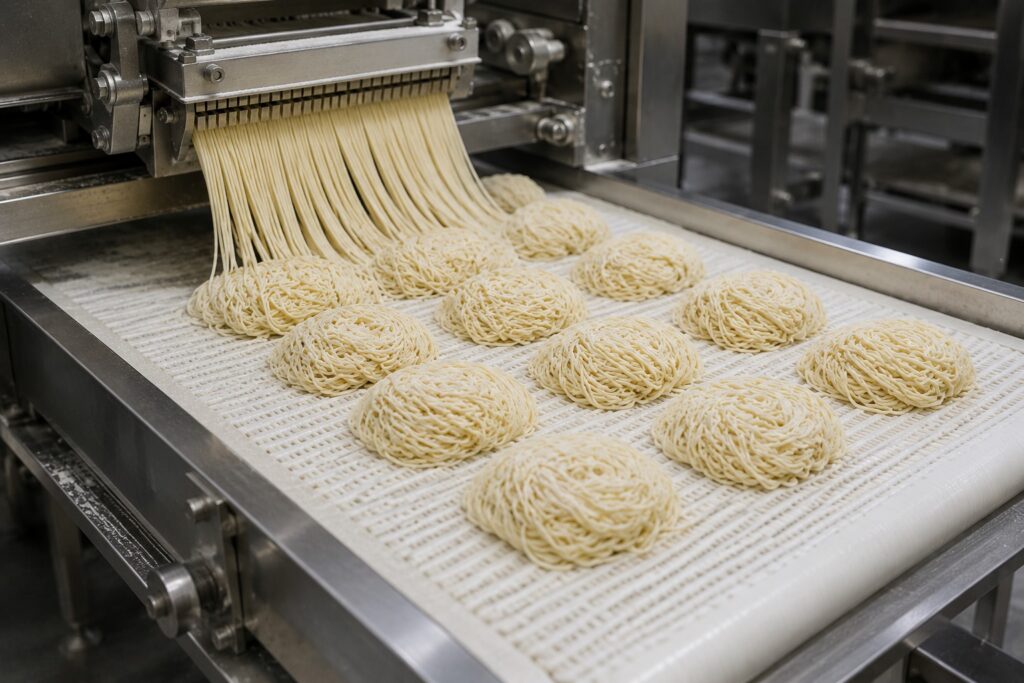
For restaurant operators, many people focus on soup, sauces, or main ingredients, but often overlook “noodles,” which are one of the most important elements of a dish. High-quality noodles do not only affect taste and texture; they also influence the customer experience, kitchen efficiency, and overall operating costs.
Choosing the right noodles for each menu is therefore not simply about selecting the lowest-priced option. It is about choosing noodles that truly meet the restaurant’s actual needs.
- Choose Noodles Based on the Menu Type
A. Noodle Soup Dishes
For noodle soup dishes, noodles should have good elasticity and should not become soggy easily, as they remain in contact with broth for a longer period of time.
Characteristics of good noodles:
1.Soft yet chewy texture
2.Maintain texture without becoming mushy in soup
3.Absorb the flavor of the broth well
Suitable for: Wonton noodle soup and other noodle soup dishes
B. Dry Noodle Dishes
Dry noodles require a texture that is firm, chewy, and able to mix well with sauces without sticking together.
Characteristics of good noodles:
1.Separate well and maintain an appealing appearance
2.Mix with sauce evenly without clumping
3.Maintain their shape after boiling
Suitable for: Dry noodles and mixed noodles
C. Stir-Fried Noodle Dishes
For restaurants serving dishes such as yakisoba, Pad Thai, stir-fried soy sauce noodles, or other stir-fried noodle dishes, noodles should be able to withstand high heat during cooking.
Characteristics of good noodles:
1.Thick and strong texture
2.Do not break easily during stir-frying
3.Absorb sauces well
4.Do not become soft or mushy under high heat
Noodles that are suitable for stir-frying help dishes look more appetizing and reduce problems such as broken or overly soft noodles in the pan.
- Choose Noodles Based on Your Restaurant’s Sales Format
A. Dine-in Restaurants
Restaurants serving customers on-site can choose noodles with the best texture because customers eat the food immediately after preparation.
B. Delivery Restaurants
Restaurants focusing on delivery should choose noodles that can maintain their quality after cooking, as food delivery may take approximately 20–40 minutes.
Characteristics of good noodles:
1.Do not become clumped together
2.Do not become soggy quickly
3.Maintain softness and chewiness after being packed
For restaurants with a high proportion of delivery sales, choosing the right noodles can significantly reduce customer complaints.
- Choose Noodles Based on Your Restaurant’s Brand Identity and Selling Point
Every restaurant has its own unique identity. Some restaurants focus on softness, some highlight chewiness, while others aim for an authentic Japanese noodle style.
Before selecting noodles, consider:
1.What type of noodle texture do you want customers to remember?
2.Do you want soft noodles or chewy noodles?
3.Do you prefer thin, medium, or thick noodles?
4.How can your noodles differentiate your restaurant from competitors?
Clearly defining your noodle identity helps create a strong and memorable restaurant image over the long term.
- Test Noodles in Real Operating Conditions Before Making a Decision
Restaurants should not judge noodle quality based on a single tasting session. Instead, noodles should be tested under actual restaurant conditions.
Recommended testing methods:
1.Test boiling times at different durations
2.Test noodle texture after resting after boiling
3.Test stir-frying under actual cooking conditions
4.Test packaging for delivery orders
5.Test during peak customer hours
These tests provide a more accurate evaluation of noodle performance compared to a single sample test.
- Choose a Reliable Noodle Manufacturer
In addition to premium noodle quality, production consistency is also extremely important.
A reliable noodle manufacturer should provide:
1.Trusted production standards
2.Consistent noodle quality across every batch
3.Clear quality control systems
4.On-time product delivery
5.Professional recommendations for selecting noodles based on menu types
Having a strong manufacturing partner helps restaurants manage costs and maintain consistent food quality over time.
Conclusion Choosing the right noodles is not only about price. It is about selecting noodles that match the restaurant’s menu, sales format, and target customers.
When the right noodles are selected, restaurants benefit from: - Better food quality - Higher customer satisfaction - More efficient operations
Ultimately, good noodles are not simply an ingredient in a dish — they are an important part of a restaurant’s success.