

- Increase Average Order Value
The easiest way to increase sales is to encourage customers to spend more per visit.
For example: If a customer currently spends an average of 100 THB per order, and the restaurant serves 100 customers per day: 100 THB × 100 customers = 10,000 THB in daily sales
If the average spending increases to 150 THB per order while serving the same 100 customers: 150 THB × 100 customers = 15,000 THB in daily sales This means sales increase without having to attract even one additional customer.
This can be achieved by creating meal sets, such as:
- Noodles + Fried Wontons + Drink
- Noodles + Additional Soft-Boiled Egg
- Noodles + Drink
Customers often make decisions more easily when menu items are presented as sets, and they tend to spend more compared to ordering items separately.
- Train Staff to Upsell Additional Items
Many restaurants lose potential sales because no one suggests additional items to customers.
Train staff to use simple and friendly questions, such as:
“Would you like to add fried wontons?”
“Would you like an extra portion of noodles?”
“Would you like to add grilled meatballs?”
“Would you like a cold drink?”
The key is to make suggestions politely without pressuring customers.
- Create Premium Menu Options
Many noodle restaurants only offer standard-priced menu items.
Consider adding premium options, such as:
- Jumbo Shrimp Wonton Noodles
- Special Duck Noodles
- Mixed Special Noodles
- Signature Dry Noodles
- Onsen Egg Noodles
Some customers are willing to pay more when they feel they are receiving greater value. Premium menu options can significantly increase the average order value.
- Increase Beverage Sales
Many restaurants achieve higher profit margins from beverages compared to food items. If only half of the customers purchase an additional drink, total sales can increase significantly. - Add More Appetizer Options
Customers waiting for their meals are often willing to order additional snacks.
Examples include: - Fried Wontons - Gyoza - Fried Spring Rolls
These menu items can increase sales while requiring relatively few additional ingredients and often provide good profit margins.
- Add Extra Options to the Menu
Many customers are willing to pay more when they have additional choices. Examples:
- Extra noodles +10 THB
- Extra wontons +10 THB
- Extra boiled egg +10 THB
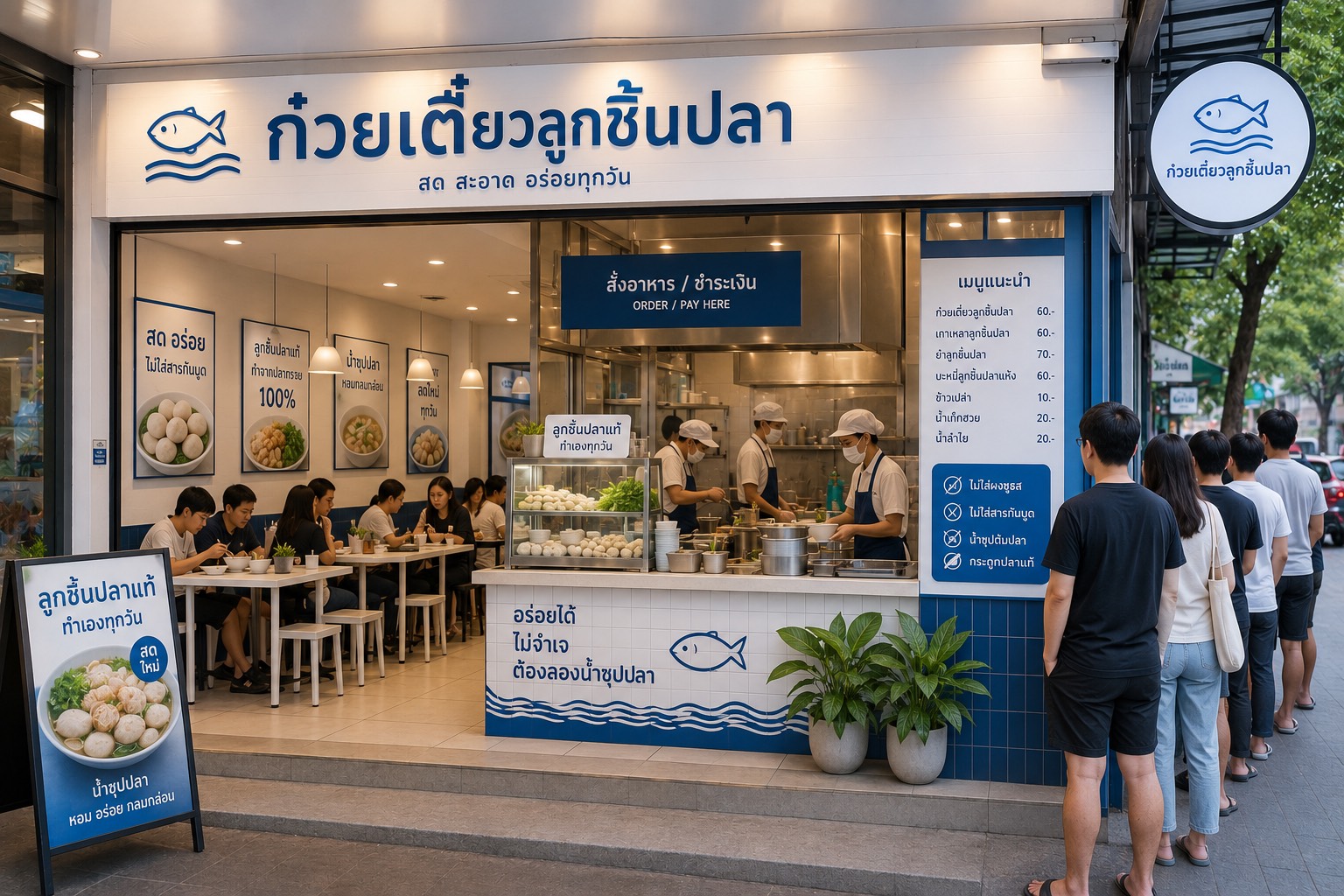
~ เพิ่มลูกชิ้น +10 บาท
These options should be clearly displayed on the menu. When customers can easily see available add-ons, they can make decisions faster and sales can increase automatically.
- Encourage Repeat Customers
Acquiring new customers usually costs more than retaining existing customers. Examples of customer retention strategies: - Loyalty point programs - Membership cards - Discount coupons for future purchases - Birthday promotions
If customers return twice a month instead of once a month, sales can increase immediately without expanding the customer base.
- Expand Ordering Channels
Existing customers can generate more sales if they have multiple ways to order, such as: - Dining at the restaurant - Pre-ordering by phone - LINE Official Account - Delivery applications
Some customers may not have time to dine in but are willing to order for takeaway or delivery to their workplace.
- Design the Menu to Promote High-Profit Items
Successful restaurants often design their menus to draw customers’ attention to profitable items. Examples: - Highlight recommended items with special frames - Mark best-selling dishes - Use attractive food images - Place premium menu items in prominent positions When customers see these items first, the chance of ordering them increases.
- Shift from Selling “Food” to Selling an “Experience”
Customers are not only paying for noodles. They are paying for: 1.Cleanliness 2.Fast service 3.Consistent taste 4.Good service 5.Restaurant atmosphere
Restaurants that create a positive customer experience can encourage repeat visits and allow customers to accept higher prices. A successful noodle restaurant is not only about selling a bowl of noodles — it is about creating value that customers remember and want to return to.